
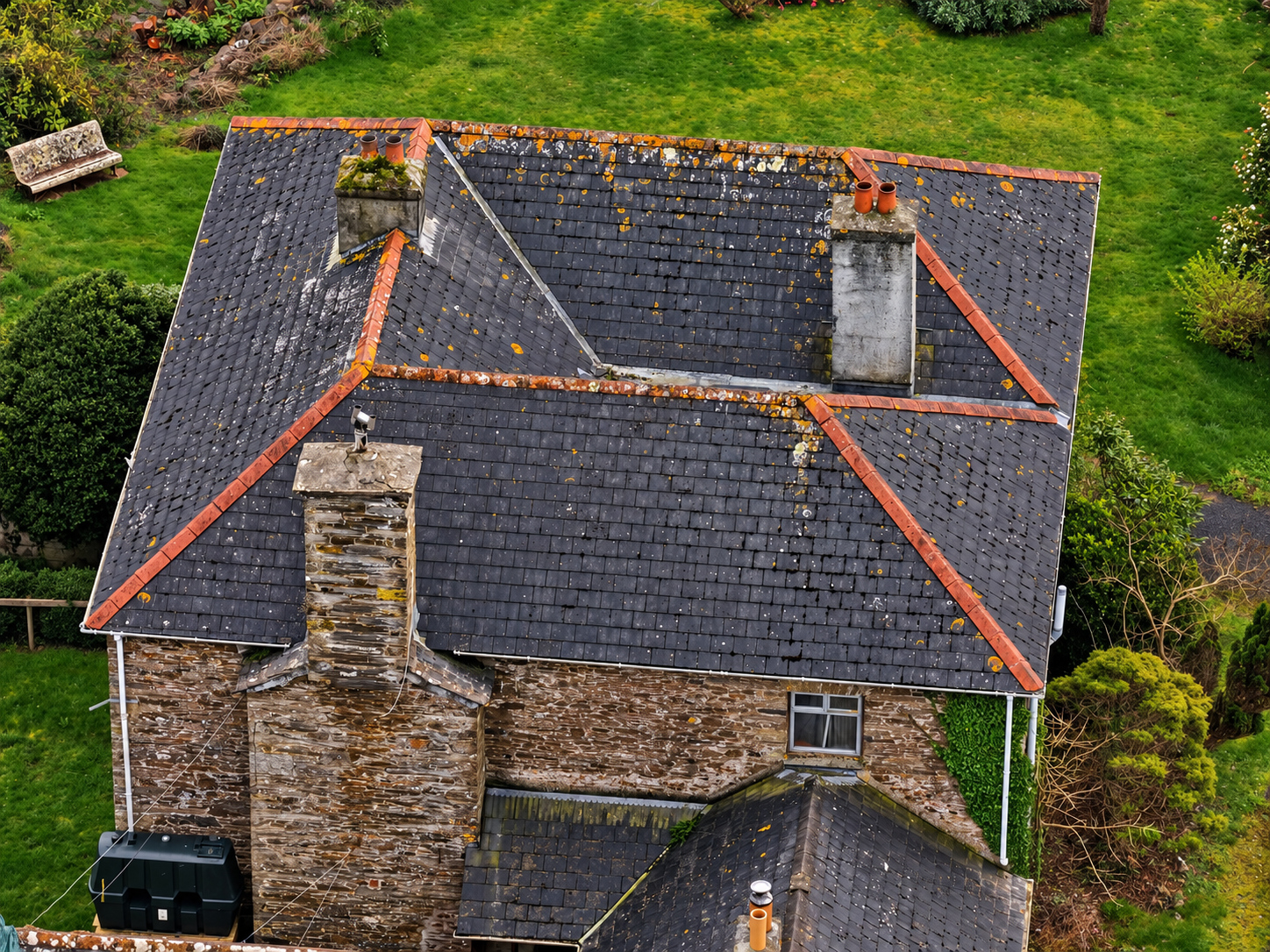
After the Storm: 7 Hidden Roof Problems to Check Before Winter
The storm has passed, but is your roof ready for winter?
When strong winds and heavy rain sweep across Berkshire, the immediate damage is often easy to spot. Fallen branches, damaged fences and overflowing drains tend to attract our attention.
But one of the most important parts of the property is also one of the hardest to inspect properly: the roof.
A roof can appear perfectly normal from the driveway while hiding slipped tiles, deteriorating flashings, loose ridge details or other concerns that deserve closer attention.
With winter approaching, identifying potential problems early can help homeowners plan maintenance before further wet, windy or freezing weather arrives.
Here are seven areas worth considering after a storm.
1. Slipped, Cracked or Missing Roof Tiles
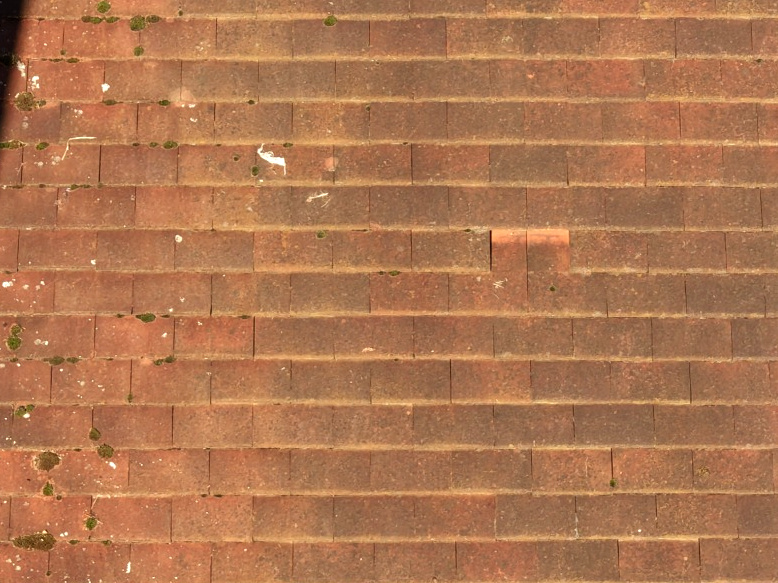
Strong winds can dislodge roof tiles or expose weaknesses that have developed over time.
A single cracked or displaced tile may seem insignificant, but it can allow rainwater to reach areas normally protected by the roof covering. If left unnoticed, water ingress can potentially affect battens, underlay and other parts of the roof structure.
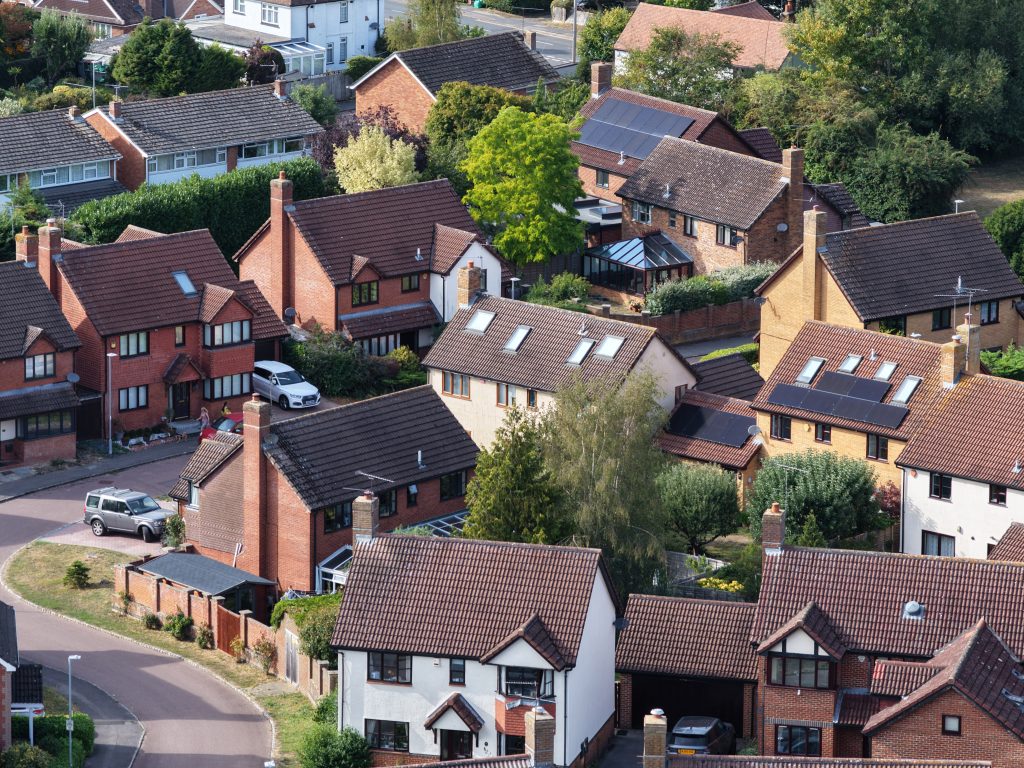
High-resolution drone imagery can help identify visible damage, including missing, slipped or broken tiles, without automatically requiring someone to climb onto the roof.
Identifying these concerns early gives homeowners an opportunity to arrange appropriate repairs before further deterioration occurs.
2. Loose Ridge Tiles and Roof Details
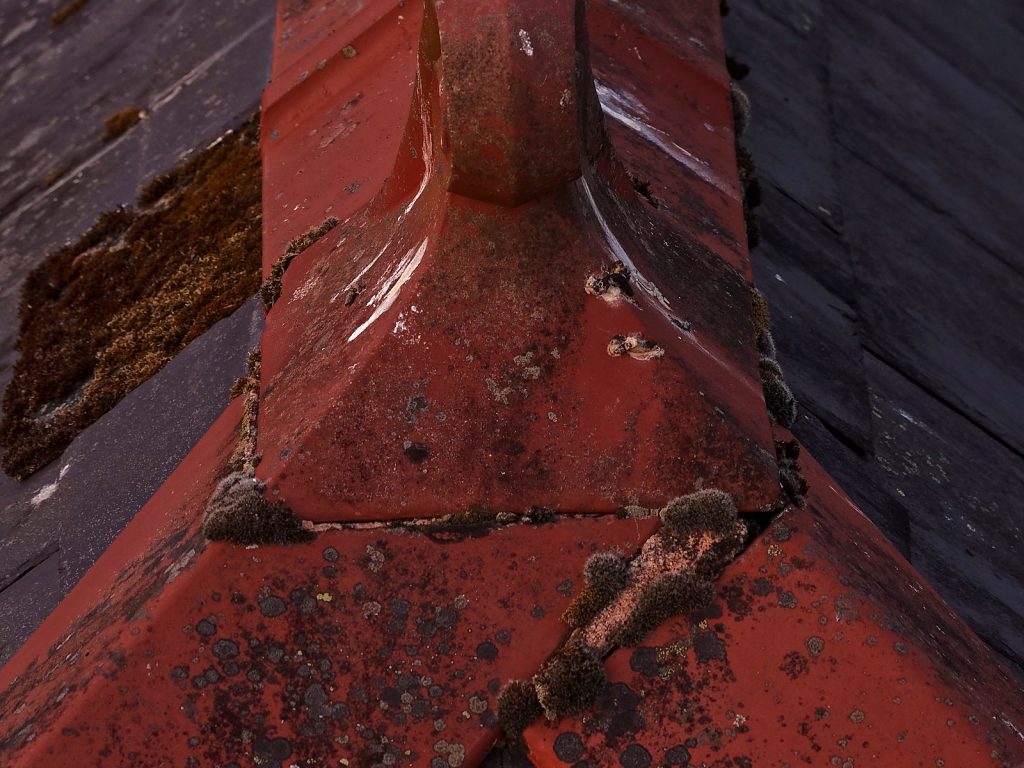
Ridge tiles sit along the highest points of many pitched roofs, making them particularly exposed to strong winds and changing weather conditions.
Over time, mortar can deteriorate, fixings may loosen and ridge details can become displaced. Storm conditions may worsen existing weaknesses.
From ground level, these issues can be difficult to recognise, particularly on taller properties or roofs with complex shapes.
An independent drone inspection can provide detailed visual evidence of accessible ridge areas, helping identify concerns that may warrant closer investigation by a qualified roofing specialist.
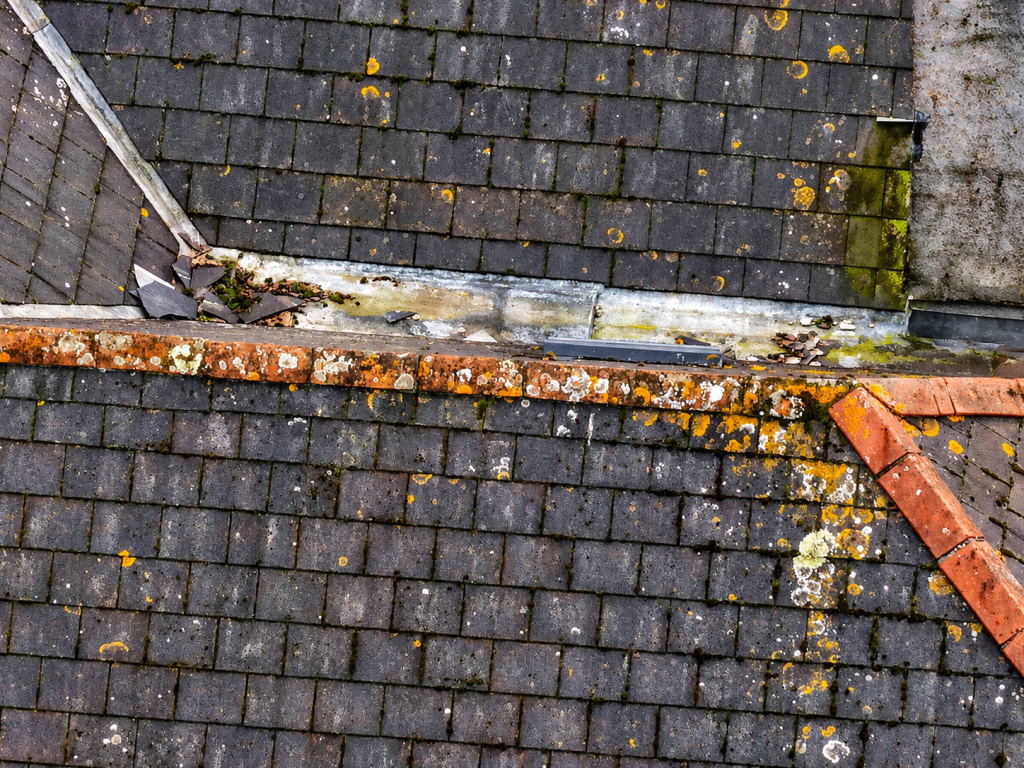
3. Damaged Flashings Around Chimneys and Roof Junctions
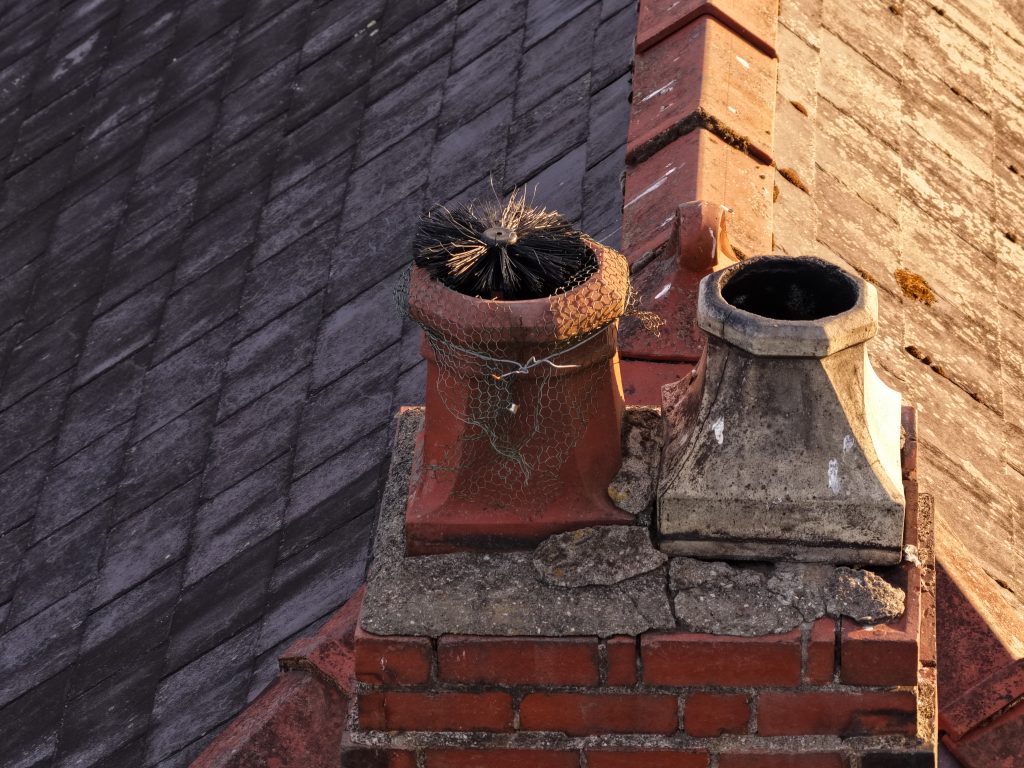
Chimneys, roof valleys, dormers and junctions between different roof sections are important areas for weather protection.
Flashings, including leadwork and other weatherproofing details, help direct rainwater away from vulnerable junctions.
Strong winds, ageing materials and building movement can contribute to displacement or deterioration.
Where flashing becomes lifted, cracked or otherwise compromised, water may find a route beneath the roof covering.
High-resolution aerial photographs can help identify visible concerns around these details, although some defects will require closer physical inspection to confirm their extent.
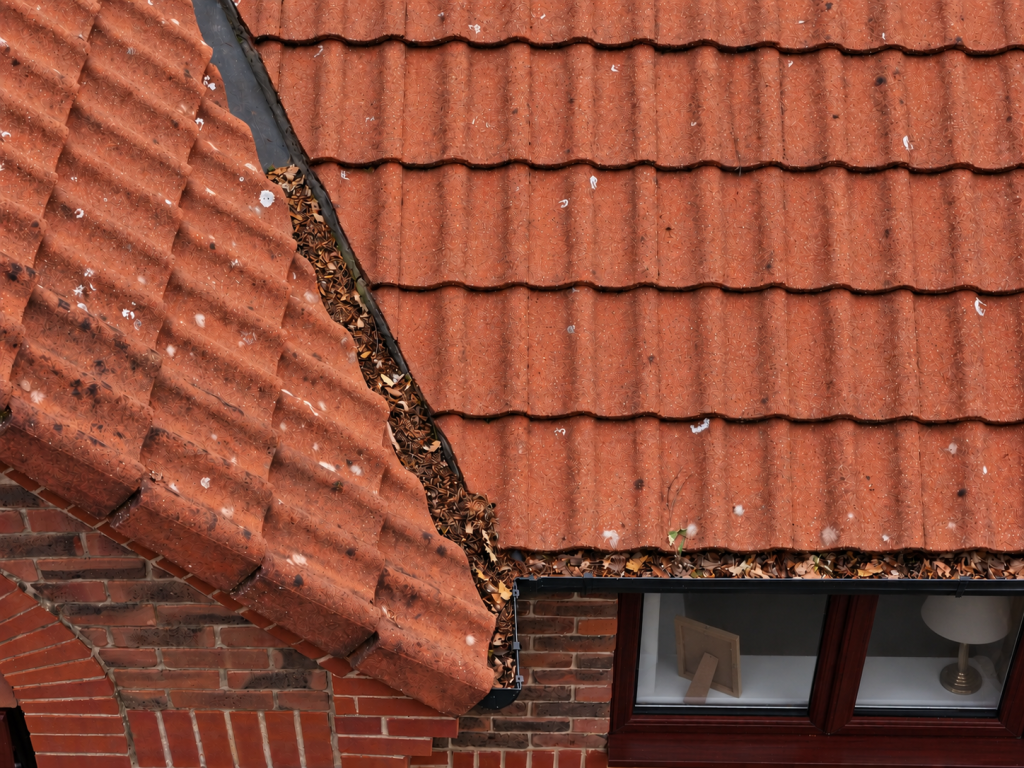
4. Blocked or Damaged Gutters
Autumn brings falling leaves, moss and debris, which can accumulate in gutters, valleys and drainage outlets.
After heavy rainfall, restricted drainage may cause water to overflow, run down external walls or collect in places where it should not.
Strong winds can also displace guttering or damage brackets and joints.
An aerial inspection can help identify visible debris, displaced sections and potential drainage concerns, particularly in areas that are difficult to view safely from the ground.
Addressing these issues before prolonged winter rainfall may help prevent avoidable deterioration to surrounding building materials.
5. Problems Around Flat Roof Edges and Coverings
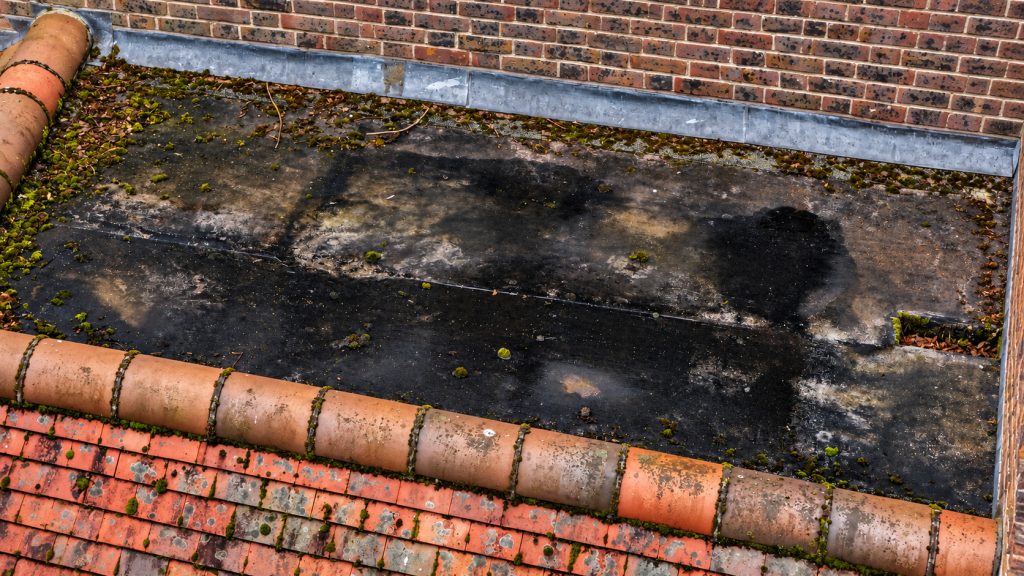
Flat and low-pitched roofs can be particularly difficult to assess from ground level, especially where parapet walls or roof edges conceal the covering.
Depending on the roof type, visible concerns may include displaced edge details, damaged surface materials, debris accumulation or areas of standing water.
Not every area of standing water indicates a defect. The roof's design, drainage arrangements and overall condition must be considered before conclusions are drawn.
Detailed aerial imagery can help establish the visible condition of accessible roof surfaces and highlight areas that may benefit from further specialist assessment.
6. Storm Debris and Damage from Surrounding Trees
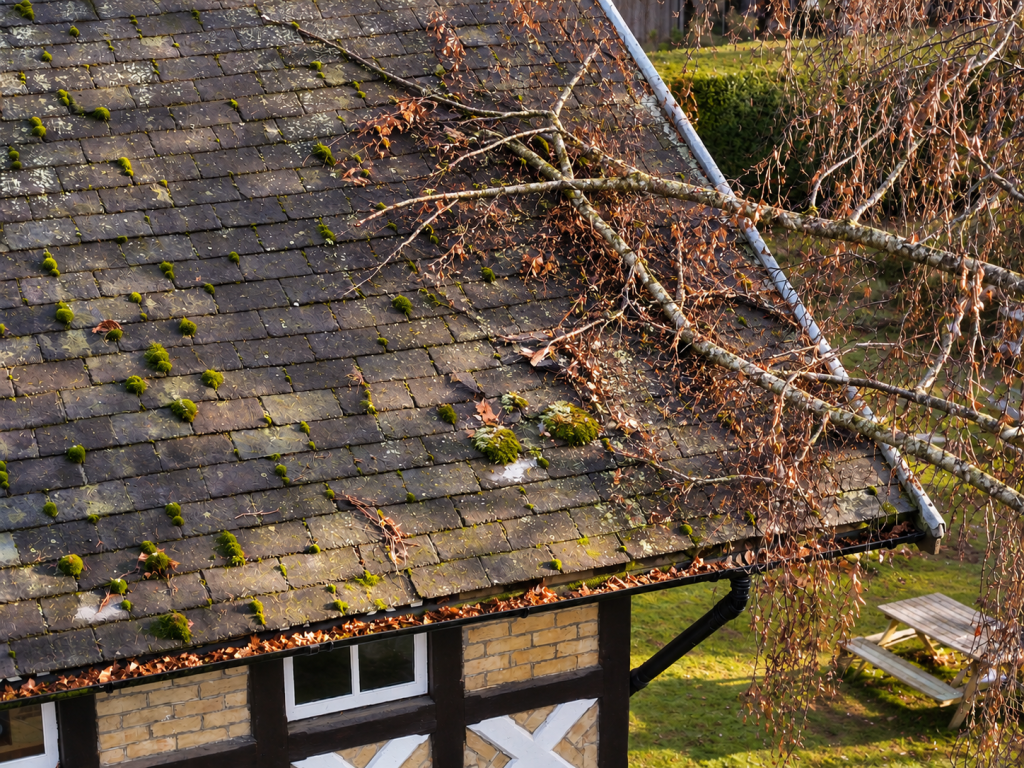
Properties surrounded by mature trees can be particularly exposed to falling branches and windblown debris during storms.
Branches, leaves and other materials may become trapped in roof valleys, behind chimneys or around drainage outlets.
In some circumstances, falling branches may also damage tiles, gutters or other roof components.
A drone inspection can help identify visible debris and areas where further attention may be appropriate, providing useful information before arranging safe removal or repairs.
7. Existing Defects That the Storm May Have Made Worse
Not every roof problem begins during a storm.
Some issues develop gradually through ageing, repeated weather exposure, movement and the natural deterioration of building materials.
Strong winds and prolonged rainfall can expose or worsen existing weaknesses that may previously have gone unnoticed.
This is one reason why a post-storm inspection can be valuable even when there are no obvious signs of damage inside the property.
An independent visual assessment can help establish the roof's observable condition and provide a useful reference for future maintenance planning.
Why Identifying Roof Problems Early Can Save Money
Roof maintenance is not simply about repairing damage. It is also about understanding what needs attention, how urgently and what work is actually justified.
A relatively small concern identified early may sometimes be addressed before it develops into a more extensive problem.
There may also be opportunities to reduce unnecessary investigation and access costs by obtaining detailed aerial evidence before arranging more intrusive work.
For example, high-resolution drone photographs may help a roofing specialist understand the location and apparent extent of a visible problem before attending the property.
This can support better planning, more informed quotations and more targeted investigation.
A drone inspection does not guarantee that repairs can be avoided or that scaffolding will never be required. Some defects need physical access, specialist testing or further investigation.
The real benefit is having better information before making potentially expensive maintenance decisions.
Why Choose an Independent Altivis Drone Roof Inspection?
At Altivis, we believe homeowners should have clear, independent evidence before making decisions about roof maintenance or repairs.
We provide professional drone roof inspections using high-resolution aerial photography to assess visible roof conditions and highlight potential areas of concern.
Importantly, Altivis does not carry out roof repairs.
Our role is to provide objective visual evidence, not sell roofing work.
Depending on the property and inspection requirements, our services can help homeowners:
• Identify visible damage and potential maintenance concerns.
• Understand which roof areas may require further attention.
• Obtain detailed photographic evidence to share with roofing specialists.
• Make more informed decisions about investigation and repair priorities.
• Potentially reduce unnecessary initial access and investigation costs.
Our inspections are conducted subject to appropriate site assessments, aviation requirements and safe operating conditions.
Where further specialist assessment is needed, we make that distinction clear.
Is Your Roof Ready for Winter?
Not all roof damage is visible from the ground. Following severe weather, an independent drone roof inspection can help identify visible defects, highlight potential maintenance concerns and provide clear photographic evidence of your roof's condition.
At Altivis, we provide independent residential roof inspections across Berkshire, including Wokingham, Reading, Bracknell, Maidenhead and surrounding areas.
We inspect and report. We don't carry out roof repairs. That means our findings are focused on providing objective evidence to help you make informed maintenance decisions.
Whether you're concerned about recent storm damage, planning winter maintenance or simply want a clearer understanding of your roof's condition, we're here to help.
Concerned about your roof? Request an independent inspection today.
Our UAV inspections provide visual evidence and reporting. They are not RICS building surveys, structural certifications or guarantees that concealed defects are absent.